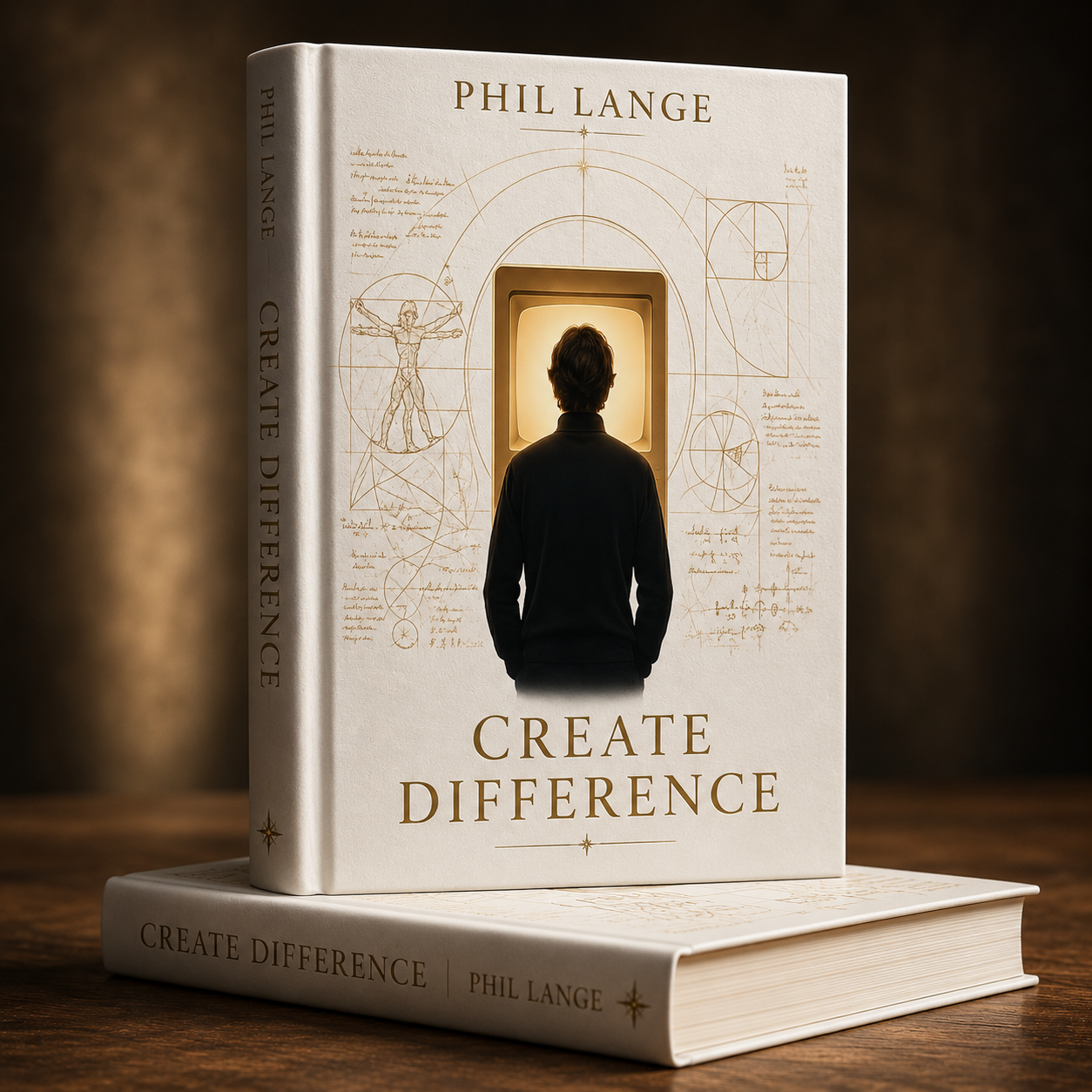
Four decades ago, a friend of Phil's wanted to end his life.
Phil was twenty-nine years old. Mixing years of aerospace engineering. Working on FPGA logic for real-time hardware switching. He was not a therapist. He was not trained for what the conversation in front of him required. What he had was an engineering frame. The way a system in contradiction produces a specific kind of failure. The way that failure points to the constraint that has to be released for the system to function again.
He ran the frame. Not on a circuit. On his friend.
The conversation lasted a single afternoon. His friend did not end his life. They co-founded a company that still exists today. It shipped hardware to GE for thirty years and produced enough revenue that the friend's children went to school and hundreds of employees could build a family life on what the engineering frame had built.
Phil did not yet know he had a methodology. He only knew the frame had worked outside the domain it was designed for.
The next four decades were spent finding out where else it worked.
Operating rooms all over Europe. The launch team for the Ariane rocket. Nine casino floors in Belgium. A two-hundred-person Swiss insurance company in the middle of a merger. A factory in Shenzhen. A cardiologist's lab. An artist's studio in Brussels. The systems were different every time. The contradiction logic held in every one.
By the time Phil sat across from a fifty-year-old founder in Brussels who said I have always wanted to start a school and did not move toward starting it, the methodology was forty years old. The frame that had once kept a friend alive had become an instrument for building what people had been carrying for decades.
The methodology that runs through this work was not borrowed. It was extracted, one domain at a time, from forty years of watching the same logic resolve contradictions to fuel innovation and problem solving across systems no one expected it to reach.